
 Par
Par Android gets smarter: how Gemini Intelligence is reinventing your smartphone ✨
Cliquez ici pour lire en français
Picture a packed Wednesday morning. You’ve got a fitness class to book, a grocery list to send for delivery, a form to fill out, and a message idea floating around in your head — but zero time to deal with any of it. You put your phone down, hoping to get back to it later.
That’s exactly the scenario Google staged on May 12, 2026, at « The Android Show, » its dedicated conference for the future of Android. And Google’s answer to that scenario comes down to two words: Gemini Intelligence.
Android no longer just wants to keep up with you. It wants to get ahead of you.
Gemini Intelligence: when your smartphone becomes a real partner 🤝
Gemini Intelligence is Google’s deep integration of its Gemini AI directly into the Android operating system — not as an app you open, but as an intelligent layer woven through the entire device. Think of it as a quiet, capable second brain that observes, understands, and acts.
The rollout begins this summer on the latest Samsung Galaxy and Google Pixel devices, before gradually expanding to Android-powered watches, cars, smart glasses, and laptops. Google is emphatic on one point: all of this happens with your privacy protected and you in control at every step.
For users across Africa — many of whom already juggle multiple mobile payment apps, delivery platforms, and messaging services on a single device — the promise is tangible: fewer app-switching headaches, more efficiency built into the everyday.
Automating your life, one task at a time ⚡
The most striking feature of Gemini Intelligence is its ability to automate multi-step tasks across multiple apps simultaneously.
Here’s what that looks like in practice: got a long grocery list sitting in your notes app? Long-press the power button, ask Gemini to build a cart with everything on it for delivery — done. Spotted a great hiking trail on someone’s screen? Snap a photo and ask: « Find a similar route on Expedia for six people. » Gemini handles it while you move on with your day.
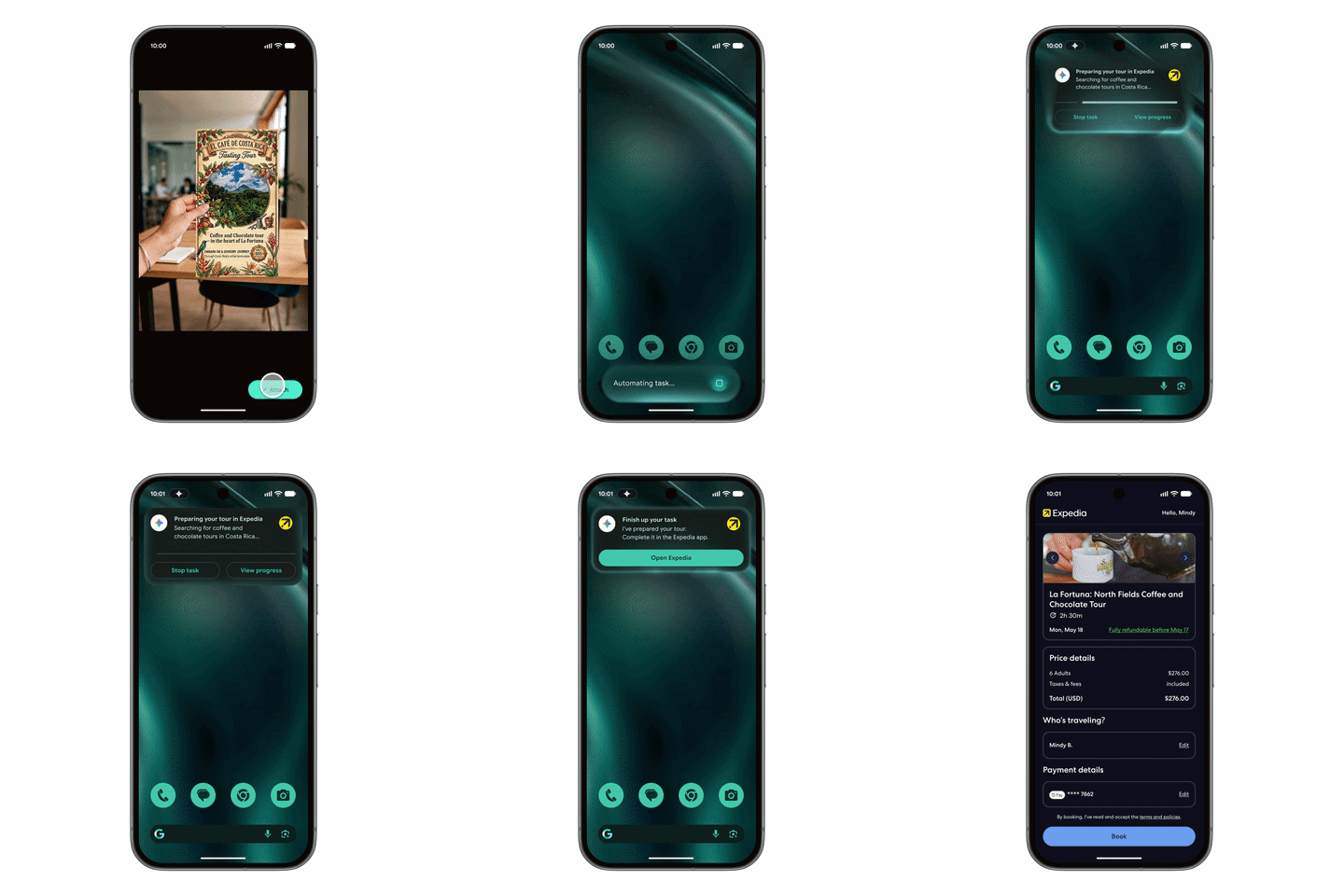
The automation is powered by what Google calls « screen context »: Gemini can read what’s currently displayed on your screen and turn that information into action. You track progress through notifications. And you always have the final say — Gemini only acts on your instruction, and stops the moment a task is complete.
Speak your mind, get polished text: meet Rambler 🎙️
Typing out a long message on a smartphone keyboard remains one of the most time-consuming frustrations in digital life. Google’s Gboard already lets you dictate text — but the problem is that the way we speak rarely matches the way we want to write. The « ums, » the repetitions, the false starts — they all end up on screen.
Rambler, the new Gemini Intelligence feature for Gboard, solves that gap. You speak naturally, and Rambler extracts what matters, shaping it into a clean, polished message. The audio is never stored or recorded — it’s used only for real-time transcription.

What makes Rambler especially compelling for our region is its multilingual capability. Powered by Gemini’s advanced multilingual model, Rambler can switch between languages seamlessly within a single message. For anyone who naturally blends French, English, and a local language in their daily conversations — a deeply African reality — this feature could genuinely change how people communicate on mobile.
Smarter browsing, effortless forms: AI does the heavy lifting 🌐
Filling out a complex form on a small smartphone screen is one of the minor miseries of digital life. Starting in late June, Gemini in Chrome on Android is set to take that burden off your hands.

Chrome’s automatic navigation can handle your most routine tasks for you — from booking appointments to reserving a parking spot. And thanks to Gemini’s Personal Intelligence technology, your device will be able to pull relevant information from your connected apps to fill in forms automatically. The connection remains strictly optional: you decide if and when to enable it, and you can switch it off anytime from your settings.
Build your own widget — no code required 🛠️
Android has always been the platform of customization. With « Create My Widget, » Google takes that philosophy to a new level: you can now build fully personalized widgets simply by describing, in plain language, what you want to see on your screen.
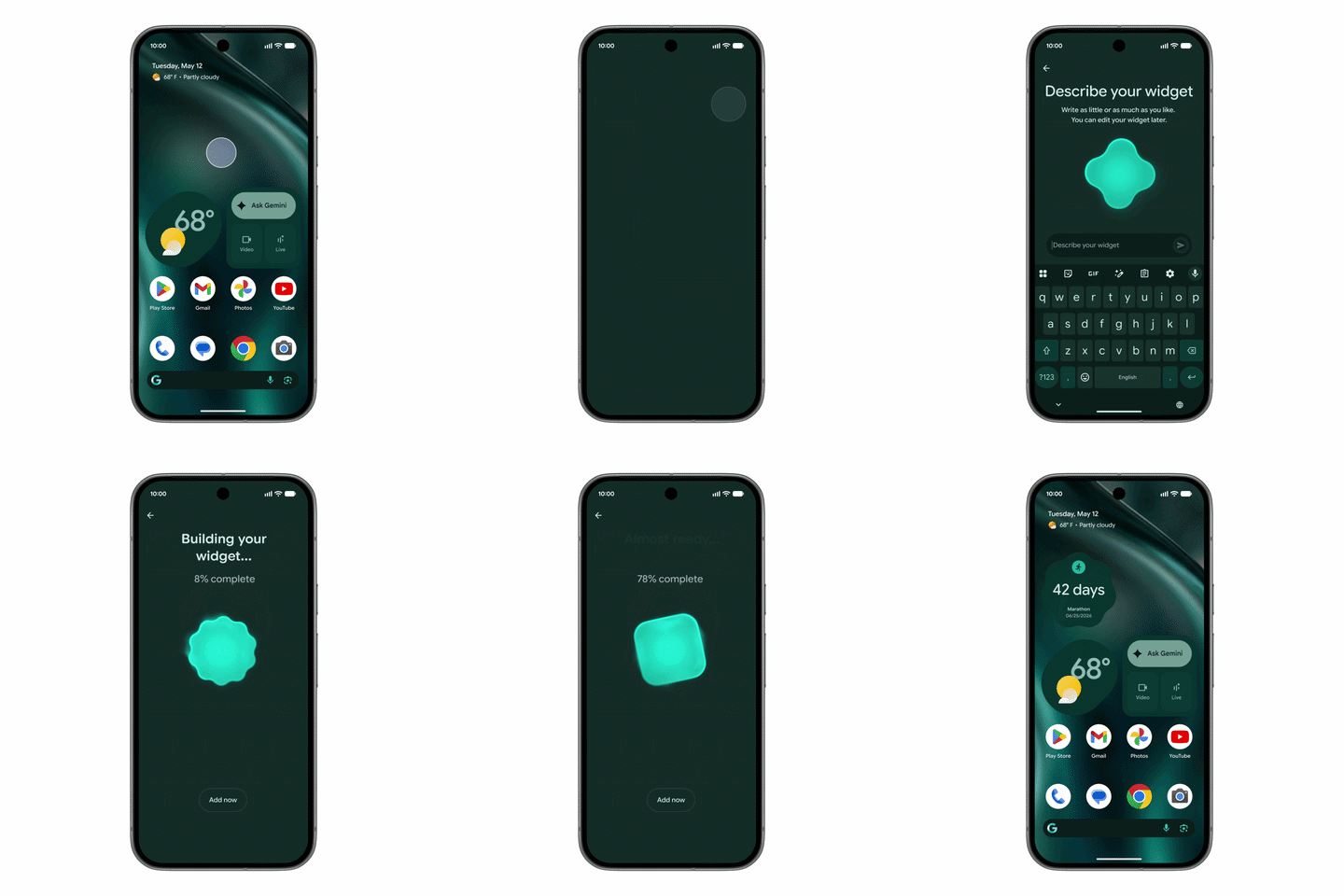
Meal-prepping every week? Ask for a dashboard that suggests three high-protein recipes. A cyclist who only cares about wind speed and rain risk? Your custom weather widget is one voice command away. These creations work on both Android smartphones with Gemini Intelligence and Wear OS smartwatches, and can be resized directly from your home screen.
This is Android’s first step into what Google is calling « generative user interfaces » — interfaces no longer built by developers, but designed by users themselves.
Emojis just got a whole new dimension 😄
It’s hard to talk about this Android conference without mentioning the quiet little revolution that came alongside it: the arrival of Noto 3D, Google’s brand-new emoji collection.
The way we communicate is constantly evolving, and our emojis reflect that. These 3D emojis bring a touch of physicality to digital moments, helping bridge what might be called the digital-emotional divide — the difference between a message being received and a presence being felt.

The new emojis will arrive on Pixel phones first, before rolling out to all Google devices. A cosmetic update? Not quite. In a world where text and emojis carry the weight of most of our emotional exchanges, giving these tiny symbols more depth and dimension is, in its own way, a statement about the quality of our digital connections.
Android 2026: more assistant than ever — but at what cost ? 🔮
What Google unveiled at « The Android Show » is ambitious, coherent, and — it has to be said — genuinely compelling. Gemini Intelligence isn’t just another feature drop; it’s a new operating philosophy for the smartphone: a device that anticipates, acts, and adapts.
But that promise raises legitimate questions. The more proactive a system becomes — the more it acts on your behalf — the more central the question of trust and control becomes. Google is insistent about consent and transparency at every step. Whether that holds up in practice is something worth watching closely.
For now, the rollout is aimed primarily at markets where the Galaxy S26 and Pixel 10 are on sale. For users across Africa, where mid-range devices and sometimes-limited connectivity define the daily reality, the question of whether these features will be genuinely accessible remains open. Google has said it intends to expand Gemini Intelligence progressively — a promise that deserves careful follow-up.
What’s clear is that Android just drew a new line. And that line runs straight through intelligence.
Which Gemini Intelligence feature strikes you as the most useful in your daily life — or the one that concerns you most? Drop your thoughts in the comments. The Griots want to hear from you.
📱 Get our latest updates every day on WhatsApp, directly in the “Updates” tab by subscribing to our channel here ➡️ TechGriot WhatsApp Channel Link 😉
Qu'en avez-vous pensé?

Vous pourriez aussi aimer

Senegal’s parliament unanimously passes critical infrastructure cybersecurity law 🇸🇳 🛡️

AFCON 2026: Cameroon’s champion Rose Bella opens up on social media pressure 🇨🇲📱

IFC pours 15.3 billion CFA into Jumia to power up African e-commerce 🛒🌍
Plus dans:News

Before GTA VI launches, Rockstar bets big on Netflix 🎮

Algeria to Meta: WhatsApp accounts must keep a local phone number 📱 🇩🇿